

Choosing Contract Administration and Claims Support for Major Australian Projects: 7 Key Considerations
22 September 2026
Introduction
Major construction and infrastructure projects operate within demanding commercial environments. Multiple interfaces, evolving scope, program pressures, and changing project conditions can create significant cost and contractual exposure throughout delivery.
Effective contract administration provides the foundations needed to manage these pressures. It establishes clear processes for notices, variations, payment, extensions of time, records, and contractual correspondence, while supporting timely and informed decision-making.
Claims support becomes equally important when changes or events affect cost, time, or contractual entitlement. The two disciplines are closely connected, but the capability required can vary considerably between advisors.
For project owners and delivery partners selecting contract administration and claims support, the following seven considerations can help identify the right level of expertise for the project.
1. Contract administration capability
Strong contract administration is proactive rather than reactive. It should establish clear contractual processes from the outset and maintain them consistently throughout delivery.
This includes administering notices, variations, extensions of time, payment processes, instructions, contractual correspondence, and key deadlines. The objective is not simply procedural compliance. Effective administration creates a clear and contemporaneous record of decisions, responsibilities, and changes as the project develops.
This discipline becomes particularly important on multi-package projects, where interfaces, stakeholders, and contractual obligations may operate concurrently.
When comparing advisors, clients should consider the depth of contract administration experience within the proposed team and whether that experience reflects the scale and complexity of the project.
Key consideration: Can the advisor manage contractual requirements proactively throughout delivery, rather than responding only when an issue becomes contentious?
2. Claims preparation and assessment expertise
Claims can arise even on well-managed projects. Variations, delay, disruption, acceleration, changed conditions, and scope development can all have consequences for time and cost.
Effective claims support requires more than preparing contractual correspondence. Claims need to establish the relevant facts, contractual basis, cause and effect, and supporting evidence in a clear and defensible manner.
For clients assessing claims, the same principles apply. An effective review should test entitlement and supporting evidence rather than simply accept or reject the position presented.
This capability can also support earlier resolution. Identifying gaps in entitlement, records, or substantiation before positions become entrenched allows project teams to focus discussions on the issues that materially affect the outcome.
Key consideration: Does the advisor have experience preparing, assessing, and responding to complex claims from both a contractual and commercial perspective?
3. Planning, delay, and quantum capability
Time and cost are often central to construction claims, particularly on major or technically challenging projects.
Where an extension of time, disruption, acceleration, or prolongation claim arises, contractual knowledge alone may not be sufficient. The assessment may require detailed program analysis to establish the sequence of events, understand critical path impacts, and determine the relationship between an event and the delay claimed.
Similarly, the financial consequences need to be properly substantiated. This may involve assessing labour, plant, preliminaries, productivity impacts, additional resources, or other project costs.
Access to integrated commercial, planning, delay, and quantum capability can improve the quality of the assessment and reduce reliance on disconnected workstreams.
Key consideration: Can the advisor independently assess the time and cost consequences of a claim, as well as its contractual basis?
4. Experience with the project's contract and delivery model
The commercial environment varies significantly between delivery models.
Traditional construct-only and design and construct arrangements typically establish defined contractual obligations and risk allocations. Collaborative models place greater emphasis on transparency, shared decision-making, aligned incentives, and active management of risk.
iCOST's existing work on collaborative contracting highlights the increasing use of alliancing, early contractor involvement, and progressive design and construct models across Australia's transport, social infrastructure, water, and energy sectors. These approaches require strong commercial discipline alongside collaboration, particularly around governance, reporting, decision-making, and accountability.
The advisor should therefore understand not only contract administration, but how the relevant delivery model affects behaviours, responsibilities, commercial mechanisms, and decision-making throughout the project.
Key consideration: Has the proposed team worked within comparable contractual structures and delivery models, and do they understand the commercial behaviours those models require?
5. Relevant sector and project experience
Experience should be assessed on relevance, not simply volume.
Major transport, energy, resources, health, defence, and social infrastructure projects can involve very different commercial risks, stakeholder environments, program constraints, and delivery requirements.
The scale of the project also matters. Large programs can involve multiple contracts, concurrent work packages, complex interfaces, evolving designs, and significant governance requirements.
Clients should therefore look beyond corporate credentials and consider the individuals proposed for the engagement. Relevant experience within the delivery team can be more valuable than a long list of projects completed elsewhere within the organisation.
This principle also applies during procurement. iCOST's work on reducing the cost burden of tendering highlights the value of clear evaluation criteria and robust prequalification when identifying capable bidders for high-value projects. The same discipline is useful when selecting professional advisors.
Key consideration: What comparable projects have the people assigned to the engagement personally delivered?
6. Objective commercial advice and the ability to support escalation
Good contract administration is not about creating claims. It is about establishing the commercial discipline and project records that allow issues to be identified, assessed, and resolved efficiently.
However, some matters will escalate.
When this occurs, continuity of knowledge can become valuable. An advisor already familiar with the contract, program, commercial position, and project records can help maintain clarity as an issue moves from routine administration into formal claim assessment or dispute resolution.
Professional judgement is equally important. Advice should remain evidence-based and commercially focused, particularly when assessing competing positions or supporting difficult negotiations.
This aligns with iCOST's approach to collaborative contracting, where robust commercial advice supports difficult commercial conversations before they develop into conflict.
Key consideration: Can the advisor support increasingly significant contractual issues while maintaining objectivity and continuity of project knowledge?
7. Resourcing, scalability, and value
Fee rates are an important consideration, but they should not be assessed in isolation.
The lowest day rate may not deliver the lowest overall cost if the project requires additional resources, specialist support, or extensive senior review. Equally, a heavily senior team may not represent efficient resourcing for routine administration.
The appropriate model should align skills and seniority with the work required. It should also allow resources to increase or reduce as the project moves through different stages.
Clients should consider who will perform the work, how senior oversight will operate, which specialist capabilities are available when required, and whether the proposed team has sufficient capacity to respond to changing project demands.
Clear scope definition is also important. Better information and clearly defined requirements allow resources to be targeted more efficiently and reduce unnecessary effort – principles that equally support more efficient procurement and project delivery.
Key consideration: Does the proposed delivery model provide the right balance of senior expertise, day-to-day capability, scalability, and cost?
Comparing contract administration and claims support advisors
When assessing potential advisors, the decision should consider the project as a whole rather than individual services in isolation. Key criteria include contract administration capability, claims experience, planning and delay expertise, quantum capability, relevant contract and sector experience, objective commercial advice, team composition, and scalability.
For relatively straightforward projects, dedicated contract administration support may meet the project's requirements. Projects with greater contractual, commercial, or program risk may benefit from an integrated capability that can address commercial management, program impacts, cost consequences, and claims as issues develop.
The appropriate approach will depend on the project's delivery model, risk profile, scale, contractual requirements, and internal capability.
Making the right selection
Contract administration and claims support play an important role in maintaining commercial control throughout project delivery.
The right advisor should bring more than knowledge of contractual processes. They should understand how those processes interact with program, cost, risk, governance, and the practical realities of major project delivery.
Early consideration of these capabilities allows clients to establish the right support before commercial pressures increase. It can also create greater clarity around contractual responsibilities, strengthen decision-making, and support the timely resolution of issues throughout delivery.
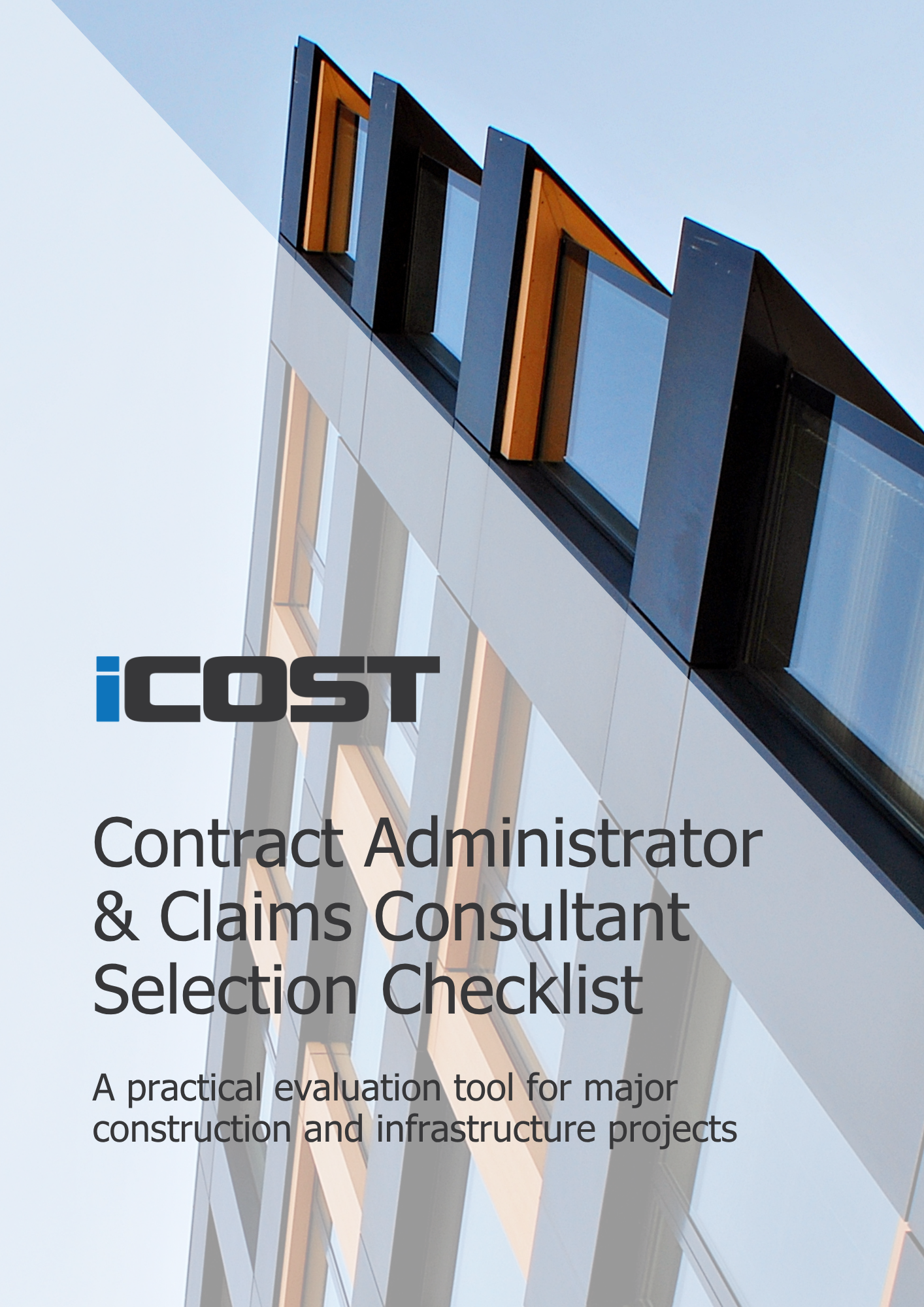
Download a Free Contract Administration & Claims Consultant Selection Checklist
Assess prospective advisors against the capabilities that matter most to your project.
Frequently Asked Questions
-
Contract administration is the process of managing the contractual obligations, notices, variations, payment processes, and correspondence that arise throughout project delivery. Effective contract administration creates a clear, contemporaneous record of decisions and changes, supporting timely and informed decision-making as the project progresses.
-
Infrastructure project management involves multiple interfaces, evolving scope, and programme pressures that can create significant cost and contractual exposure. Strong contract administration provides the foundations to manage these pressures proactively, rather than reacting only once an issue becomes contentious.
-
Contract administration focuses on maintaining contractual processes and project records throughout delivery. Claims support becomes relevant when changes or events affect cost, time, or contractual entitlement, requiring the relevant facts, contractual basis, and evidence to be established. The two disciplines are closely connected, but the capability required can vary between advisors.
-
This depends on the complexity of the issues involved. Many contractual and commercial matters can be managed through robust contract administration and claims support. However, construction legal support may be required where a matter escalates into formal dispute resolution or requires legal advice beyond commercial and contractual assessment.
-
Clear project documentation, including notices, instructions, and contractual correspondence, creates an evidentiary record that supports entitlement and substantiates positions if a claim or dispute arises. Gaps in project documentation can weaken a party's position when claims are assessed.
-
Contract compliance involves meeting the procedural and substantive obligations set out in the contract, such as notice periods, reporting requirements, and payment processes. Beyond procedural compliance, effective administration also supports clear accountability and decision-making as the project develops.
-
iCOST's article outlines seven key considerations, including contract administration capability, claims preparation and assessment expertise, planning and quantum capability, relevant sector experience, and resourcing and scalability. Assessing advisors against these criteria helps identify the right level of expertise for your project.
-
Yes. Traditional construct-only and design and construct arrangements typically involve defined contractual obligations and risk allocations, while collaborative models place greater emphasis on transparency and shared decision-making. Advisors should understand how the relevant delivery model affects commercial behaviours and requirements.

Is your project's contract administration and claims support up to the task?
Talk to our team about strengthening contractual discipline and commercial control on your next project.
This article is not intended to represent the official views or position of iCOST. While every effort has been made to ensure accuracy, the content is provided for general informational purposes only and does not constitute professional advice.
Subscribe
Subscribe for news, insights, and updates from iCOST.